
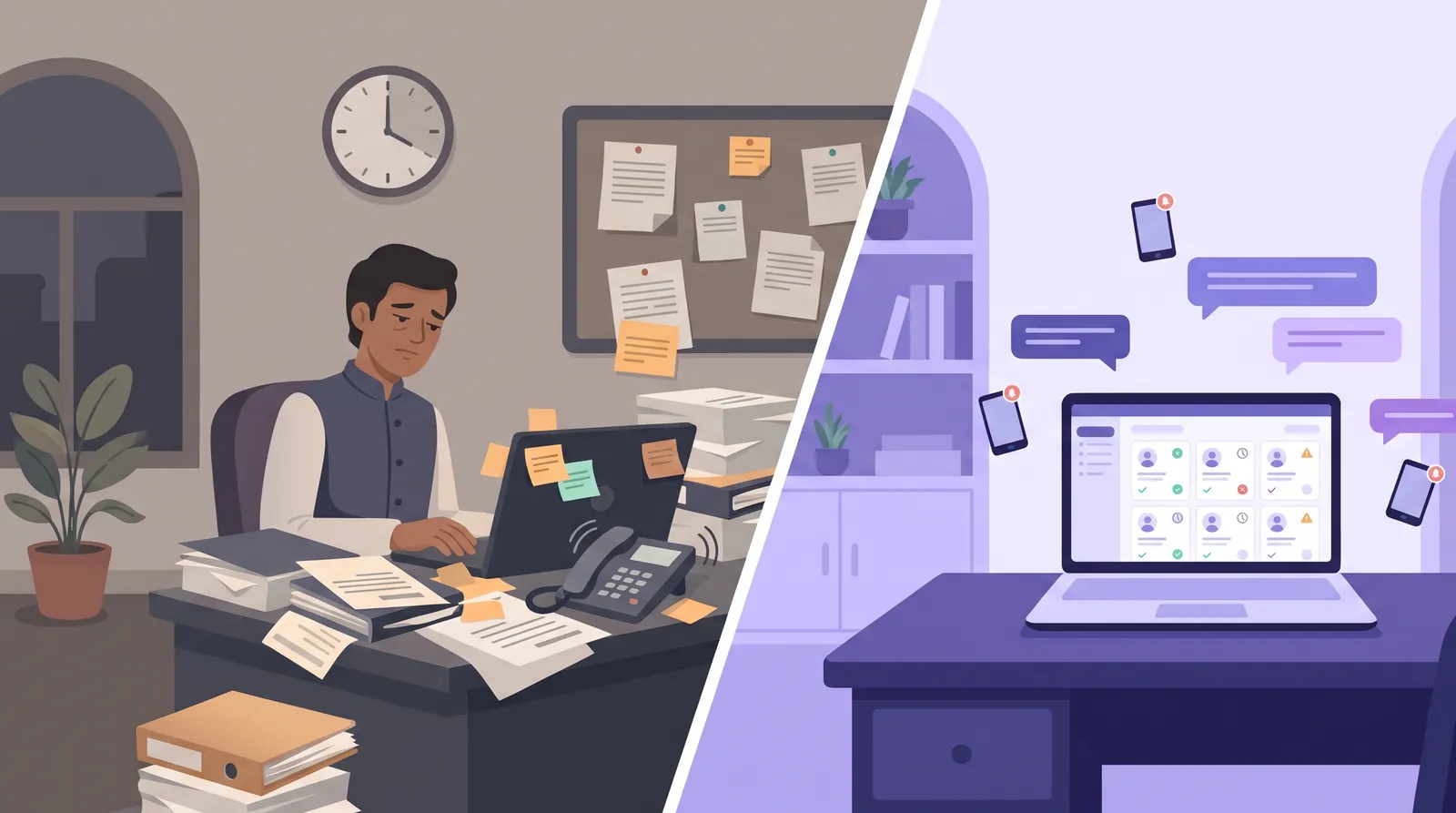
An admissions office opens the season with one job: answer enquiries. By week three it has a different job. It is chasing applicants.
Who still owes a Class 12 marksheet?
Whose migration certificate was due last Friday?
Which provisional admissions should be cancelled because the documents never came?
Most teams answer those questions with a spreadsheet, a phone and a lot of evenings. One admissions team we work with runs a call centre of several dozen people during intake, and much of their day is follow-up, not first answers.
This guide shows how admissions follow-up automation works when it is driven by each applicant's eligibility, and where a person should stay in the loop.
These figures come from our admission funnel benchmarks, drawn from ePravesh's 2026 admission-cycle data at four Indian higher-education institutes.
The Problem
Follow-up stays manual because every applicant needs a different message. One bulk email cannot know who is missing what.
Take three students in the same programme on the same day:
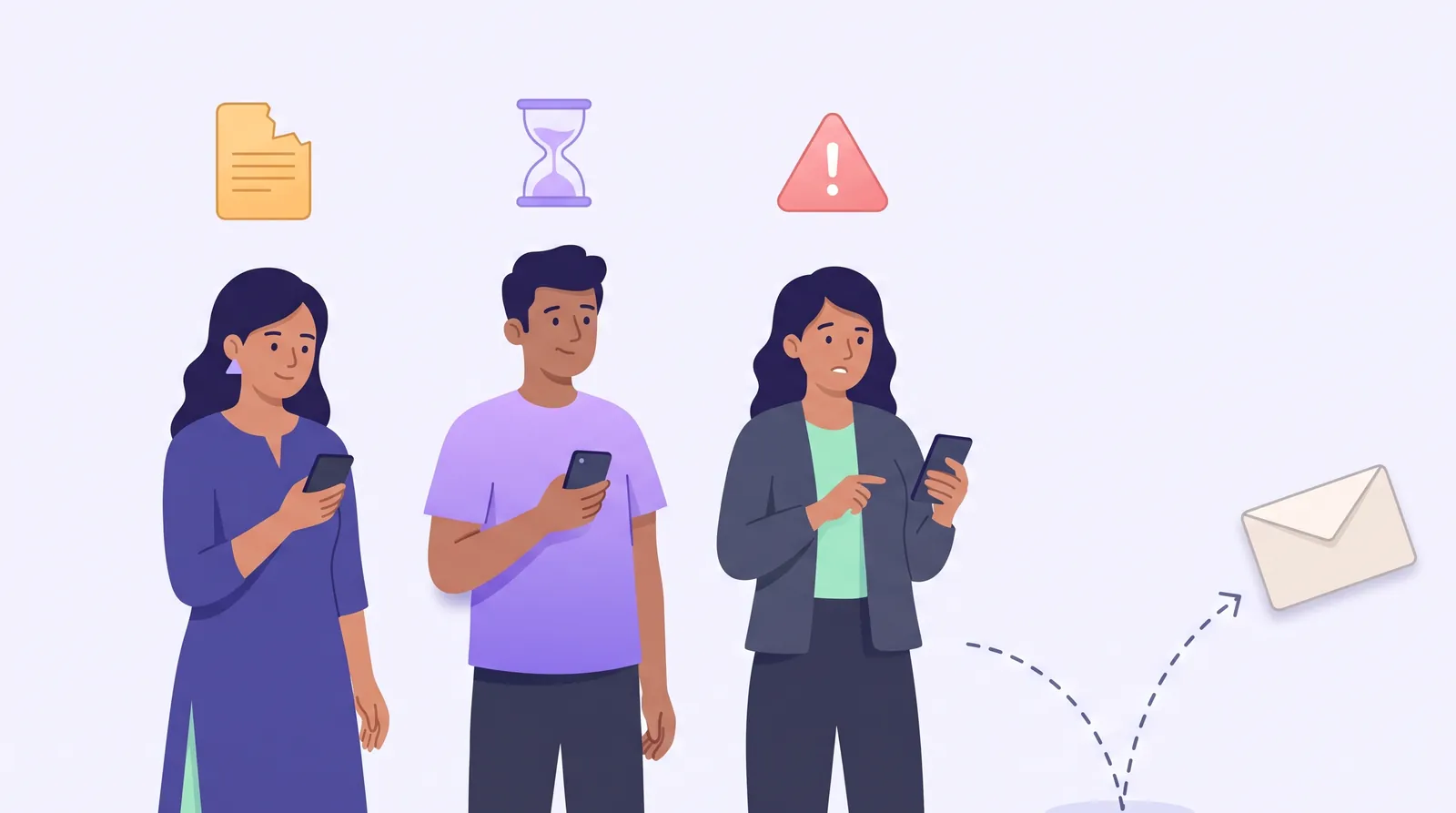
A bulk "please complete your application" email is wrong for all three. It nags B, under-informs A and never warns C that the seat is at risk.
So the counsellor filters the sheet, writes three messages and makes three calls. Then repeats it for every programme, category and deadline.
What Manual Chasing Really Costs
The hours are only the visible part.
The first one becomes a grievance after the merit list is out. The last one is where seats quietly slip away.
How It Works
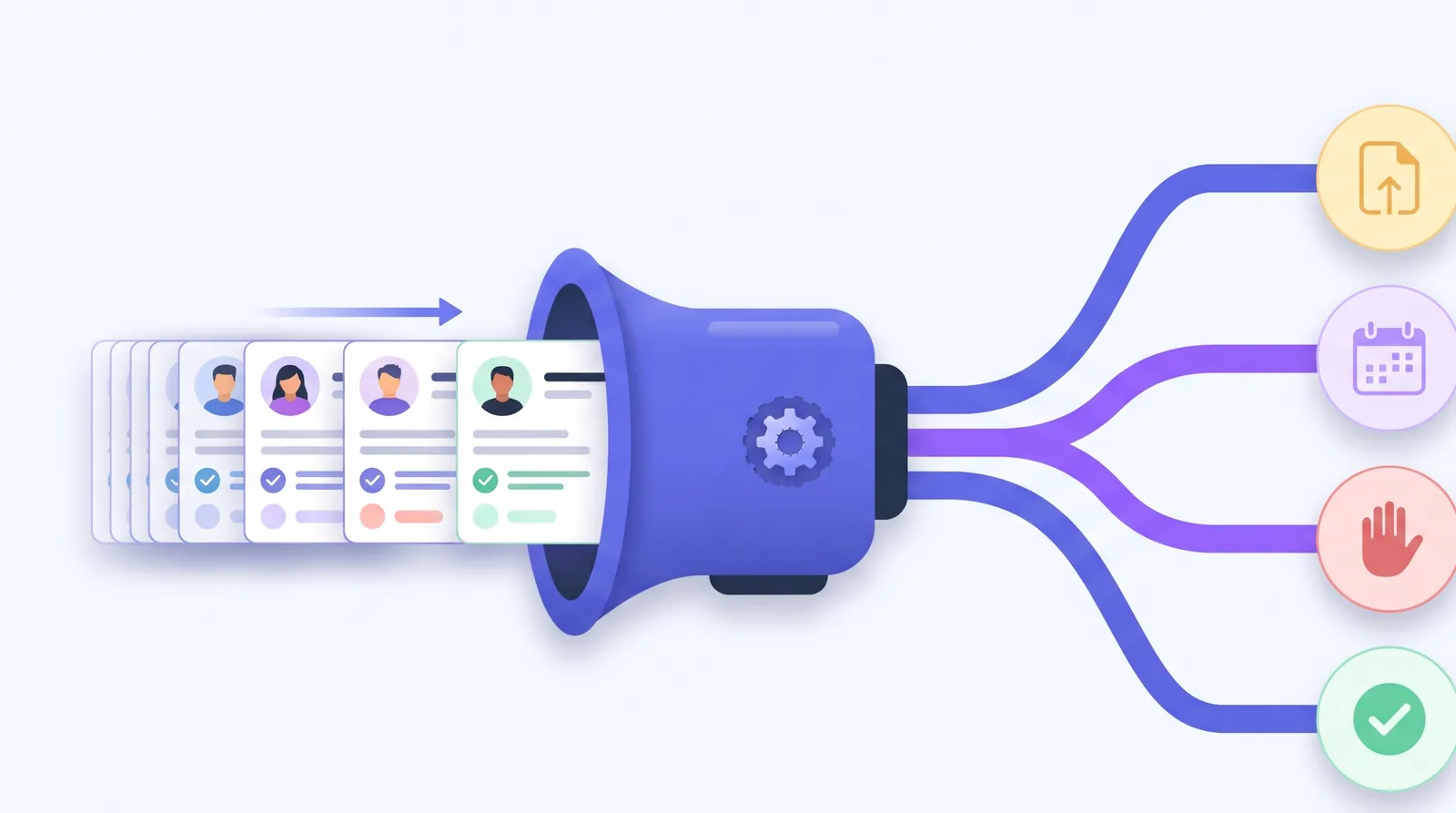
Eligibility-based follow-up checks where each applicant stands and sends only the next message that applies. It replaces the filtered spreadsheet, not the counsellor.
The system runs four checks for every applicant, on a schedule:
- Is a required document missing? Send a certificate reminder that names the exact document.
- Is a deadline close or past? Send a date follow-up with the date and what happens after it.
- Still unmet after the cut-off? Raise a cancellation trigger and send the final notice.
- Everything complete? Send nothing, or confirm the next stage.
Student A, B and C each get the right message, or none, without anyone touching a sheet.
Generate Eligibility Data, Don't Type It
The checks are only as good as the data behind them. If staff type the intake and last date for each applicant, one typo sends a cancellation notice to a student with a week left.
The safer design generates fields like intake and end date from the programme itself. The reminder logic and the student's own screen then read the same value.
Show Status, Not a Dead End
An incomplete application should show what is pending, not a button that goes nowhere. Hiding the action link and showing a clear status document removes a whole class of "the button doesn't work" calls.
Compare the Options
Only eligibility-driven follow-up is both right for each applicant and fast enough to matter.
| Manual chasing | Bulk reminders | Eligibility-driven | |
|---|---|---|---|
| Matches each applicant's gap | ✅ If the counsellor checks | ❌ No | ✅ Yes |
| Reaches students within the hour | ❌ Rarely | ⚠️ Only on send day | ✅ Every run |
| Works after office hours | ❌ No | ⚠️ If scheduled | ✅ Yes |
| Same treatment for everyone | ⚠️ Depends on staff | ⚠️ Yes, but wrongly | ✅ Yes |
| Handles cancellations | ⚠️ From memory | ❌ Not at all | ✅ Dated trigger |
| Effort per extra applicant | ❌ Grows | ✅ Flat | ✅ Flat |
| Audit trail | ❌ Call notes, if any | ⚠️ Send log | ✅ Every step, dated |
Most portals stop at the middle column. It is cheap, and it is why students call to ask whether the mass email applies to them.
Timing Matters Most
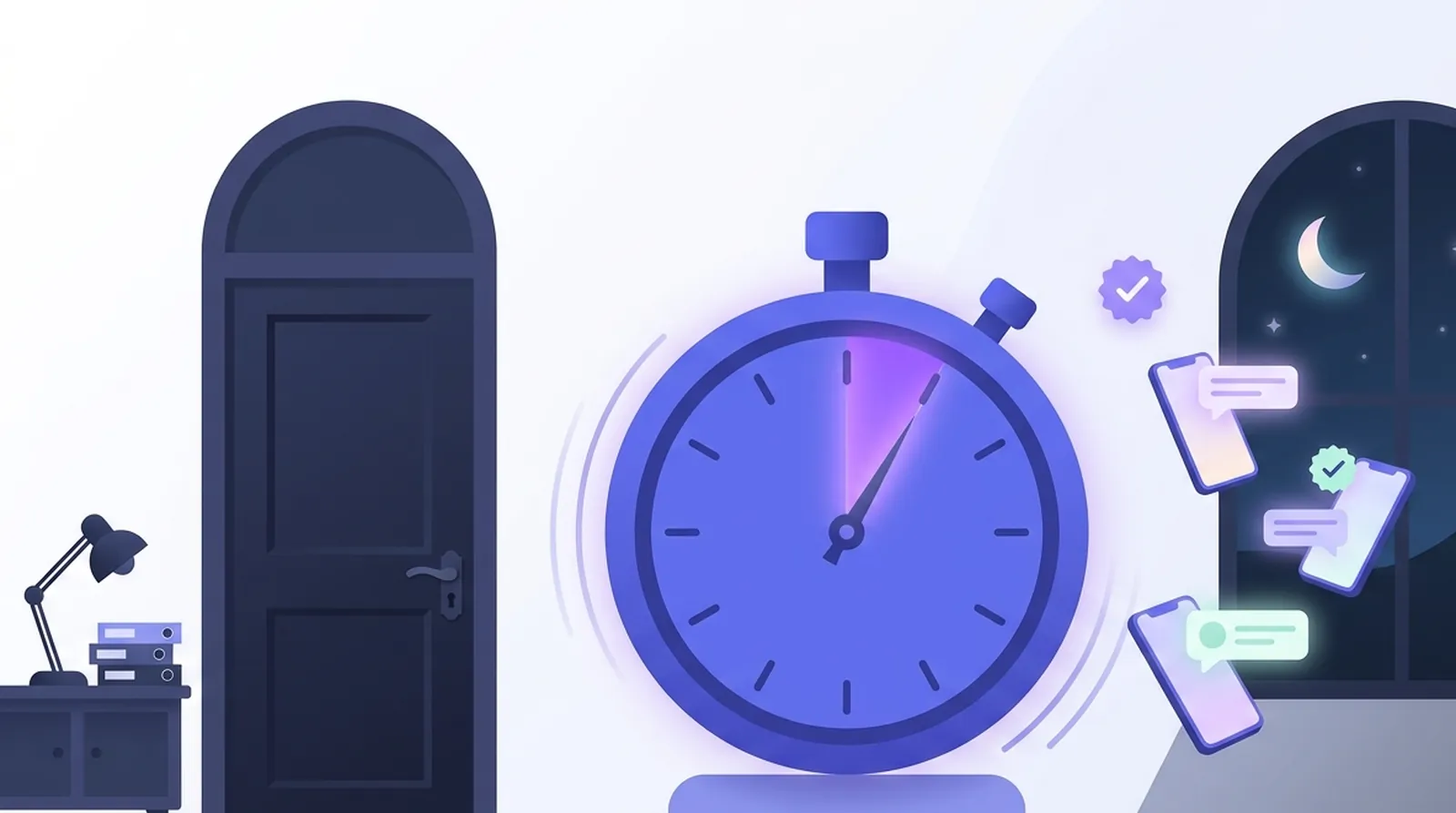
Send the first reminder within an hour of the gap appearing. Speed matters more than volume.
ePravesh's 2026 cycle data shows how short the window is:
A counsellor's call the next morning reaches only the small group that was going to pay late anyway.
The evening matters too:
Manual follow-up does not work those hours. An automated schedule does.
A Reminder Schedule You Can Copy
| When | Message | Channel |
|---|---|---|
| ⏱️ Within 1 hour | Name the missing document, share the upload link | WhatsApp or SMS + email |
| 📅 7 days before | Restate the document and the date | WhatsApp or SMS |
| ⚠️ 2 days before | Warn that the seat depends on it | WhatsApp, SMS and email |
| 🔔 Deadline day | Final notice with the closing time | All channels |
| 🚫 After cut-off | Cancellation trigger, notice to the applicant | Email + officer review |
For wording, see our guide to email and SMS during admissions. For which channel carries which message, see the WhatsApp and email communication stack.
Cancellation Rules
Automate the trigger, not the final decision. The system detects the unmet requirement, sends the notice and queues the case for an officer.
Cancellation is the one follow-up that hurts if it is wrong. A student whose board result is delayed for everyone should not lose a seat to a rule.
❌ Cancellation by spreadsheet
- Officer remembers which deadlines passed
- Notice sent if someone has time
- No record of when the clock started
- Refund disputes argued from memory
✅ Cancellation by trigger
- Unmet requirement detected on schedule
- Final notice sent automatically
- Officer confirms or grants an exception
- Every date stored for the record

Cancellation Dates Decide Refunds
Cancellation is also a fee event. UGC refund rules tie the amount returned to the date an admission is withdrawn or cancelled.
Our post on UGC norms on original documents and fee refunds has a refund calculator that works from those dates.
What ePravesh Is Building
ePravesh is building a follow-up engine that sequences reminders step by step from each applicant's eligibility status. It came out of a product development review on 14 October 2026, prompted by how much of an admissions team's day goes on chasing.
The engine works on the ePravesh applicant record that already holds the form, documents and payment. Optional AI counseling channels on WhatsApp and email can carry the reminders and answer the questions they prompt. Delivery depends on the channels your institution configures.
Key Takeaways
- Most admission-season work is chasing applicants, not answering first enquiries
- Bulk reminders fail because each applicant is missing something different
- Eligibility-driven follow-up sends only the next message that applies
- Generate intake and end dates from the programme; never type them per applicant
- Replace dead "Continue" links with a clear status view
- Send the first reminder within an hour: 94% of payers paid within an hour
- Automate the cancellation trigger; keep the final decision with an officer
- Store trigger, notice and decision dates, because refunds depend on them
ePravesh is an admission platform that runs the full cycle, from form and fee to merit list, with an optional AI counseling suite on WhatsApp, voice, chat and email. Book a free demo to see how follow-up would run on your own deadlines.
Frequently Asked Questions
What is admissions follow-up automation?
It is software that decides which reminder each applicant needs next, based on where that applicant stands. A student missing a certificate gets a certificate reminder. A student near a deadline gets a date reminder. A student past the cut-off is flagged for cancellation.
Why can't admission offices just send one bulk reminder to everyone?
Because every applicant is missing something different. A bulk mail tells a student who has uploaded everything to upload documents, and tells a student who missed the deadline nothing useful. Follow-up has to read each applicant's eligibility position to be correct.
How fast should an admission reminder go out?
Within the hour where possible. In ePravesh's 2026 admission-cycle data, 94% of students who paid did so within an hour of submitting. A reminder sent the next morning by a counsellor misses most of that window.
Should admission cancellation be fully automatic?
The trigger should be automatic and the decision should stay with a person. Let the system detect that a requirement is unmet past the cut-off, send the final notice and queue the case. An admissions officer then confirms, so genuine exceptions are not cancelled by a rule.
What happens to the fee when a provisional admission is cancelled?
That depends on UGC refund rules and your own fee policy, which link the refund to the date of cancellation. Record the trigger date and the notice date for every cancellation so the refund calculation can be defended later.